When Should You Change Disposable Gloves? Avoid These Costly Food Safety Mistakes
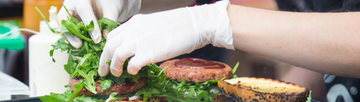
Disposable gloves are one of the simplest and most inexpensive tools for preventing food contamination but only when they're used correctly. Wearing the same pair for too long can spread bacteria just as easily as using bare hands, putting customers, employees, and your reputation at risk.
Food Service Gloves
A great rule to follow is to change gloves whenever you are handling a new ingredient. For example, changing gloves after handling raw meat or fish and grabbing a new pair before preparing a fresh salad. This helps to prevent the cross contamination of bacteria from other foods and promotes a safe and sanitary environment.
Gloves should also be changed after carrying out other tasks such as cleaning to prevent chemicals or bacteria from coming in contact with food. Although, employees should wear gloves while cleaning to prevent harmful bacteria from coming in contact with bare hands.
Food allergies are another huge concern while working in kitchens or preparing food. Gloves should be switched before working with dishes going to customers with allergies or concerns.
As a general rule, gloves should be changed every two hours.
Medical/Exam Gloves
It is important to note that some patients may be allergic to latex medical/exam gloves, and if that is the case, latex-free options such as nitrile or vinyl gloves should be used. The FDA also banned the use of powdered medical/exam gloves on December 19th, 2016 due to the risk of sensitivity or allergic reactions to the powder.
Medical/exam gloves should always be used during contact with a patient and should not be removed until after examinations or contact with a patient is completed. The same glove should not be used to carry out examinations or care on multiple patients to prevent the spread of harmful bacteria or pathogens. Gloves should also be worn before procedures to keep environments sterile.
General Tips and Tricks
Rule number one, always remember that simply wearing gloves is not enough to prevent the spread of foodborne illness in food service settings or pathogens in medical settings. Always ensure hands are washed before and after using gloves, this includes washing hands before putting on a new pair of gloves. This helps prevent bacteria that may have come in contact with bare hands from spreading.
Gloves should also be checked or rips or tears before donning, and should be immediately removed if they are ripped or torn while in use. It is important to keep an eye on disposable gloves, especially while using sharp objects and to make sure hands are washed thoroughly before donning a new pair and continuing tasks.
Finding gloves that are the right size is also essential to preventing the spread of bacteria and preventing rips or tears. Gloves that are too tight may rip easily, and gloves that are too loose may not provide adequate coverage or protection. Luckily, GloveNation provides gloves in a variety of sizes so you can find just the right size to suit your needs. Disposable gloves shouldn’t be washed, reused, or shared among employees after use as they are designed for single use, and washing may cause damage or prove ineffective at removing harmful bacteria.
Disposable gloves are an essential food safety tool but they're only effective when changed regularly. Frequent glove changes reduce contamination risks, protect customers, and help maintain compliance with food safety standards.
Looking for reliable food-service gloves? Browse our full collection of disposable gloves designed for restaurants, catering, food prep, and commercial kitchens. See the glove we recommend! Here